Showing posts with label Mindset. Show all posts

Wednesday, November 8, 2017

Getting your mind right


Recent events are having the effect that events always have when they are recent: Folks are thinking and talking -- at least for now -- about issues that are ever present, but are most often ignored by most. It's human nature to do this of course. In the words of the fictional Matthew Harrison Brady, we don't  think about things we don't think about. Indeed, this tendency is itself so predictable that investors have name for the phenomenon: Recency Bias. Still, one supposes it's better to think about these matters episodically, or reactively, than not to think about them at all. Here, of course, we think about these issues pretty much all the time.

So with that, I recycle, for the third time, the most read -- and I think probably most important -- column ever to appear here. Because recent events are going to be future events. And the time to decide how you will act -- who you will BE -- when that happens is now.


Some folks like a triad. You will also hear lots of discussion about three-legged stools. Others prefer to slice a pie into four pieces.  Some would rather disassemble the device into components. Whatever your favored metaphor, the simple notion of “self defense” implicates many considerations.


You have to have tools that work, every time, and are suited to you. You have to be able to use those tools effectively, so that means adequate marksmanship and competent, reflexive gun-handling. To achieve those, you have to train, and the training has to be realistic and relevant. Then you have to practice often and effectually – recognizing that training and practice are not the same thing. Your ancillary gear has to be suited to your particular use of it, and as reliable as your primary tools.

But while all of these are necessary, none of them is sufficient. All of these considerations matter, but there is one thing that is lord of them all: Mindset.

Robert's Rule is that "Mindset Matters Most." Fighting mindset determines outcomes. Mindset implicates the largest questions: How do you believe you came to occupy the universe? Mindset invades the smallest of moments: Will you keep fighting for this next second?

Not only will the better mindset prevail “all things being equal,” but the man with the better mindset can prevail over an adversary who is better equipped or trained or both, while a poor mindset renders expertise irrelevant. This is not a new notion. Sun Tzu** said 2500 years ago that every battle is won or lost before it is fought.

Proper mindset drives you toward the satisfaction of all the other necessary elements: You are determined to expend the time and sweat and money to train realistically and practice effectively. You have done the research and trials necessary to know what weapons and gear will work best for you, and you have not stinted on buying the best you can afford.  But mindset stands apart from and above all these other factors.

Proper mindset means that you have decided that you are a human being and that human beings have the right to defend their lives and wellbeing, and the lives and wellbeing of those in their care or charge. You have decided that you concur with the Founders' belief that your right to life is natural and inalienable. You have decided that the image of an armed woman standing over the bleeding body of a would-be rapist is morally superior to the image of a battered woman lying on the ground, watching as her rapist flees.

To have a proper mindset is to be utterly ready for that which you earnestly pray will not occur. Proper mindset means that you can walk away from any insult or offense that does not warrant a fight, no matter the injury to your ego. But proper mindset means that you are ready to fight when it is time to fight, because you have decided you will fight long before the fight. Proper mindset is what spares you the paralysis of “this can’t be happening,” so that you can get into the fight when it will do you the most good. It is proper mindset that will keep you in the fight – when you are afraid or exhausted or shot – until you prevail or die.

Proper mindset means you have thought about what this kind of fight really looks like, even if you have never engaged in or witnessed one. You know that you are willing to do great harm to a determined assailant, to wet your hands with his blood, if that’s what it takes to end his aggression. More than this, you know if you are capable of ending the life of another human being if need be. Proper mindset means that you have examined your heart of hearts with unflinching honesty. If you are a person of faith, proper mindset means you have reconciled these issues with that faith before the moment arises.

Mindset is not magic; it is not an incantation or a prayer or a mantra. It is neither esoteric nor theoretical; it is, instead, the most practical thing there is. Mindset is a set of decisions, considered with greatest care, resolved to a moral certainty and then followed through, come what may. Proper fighting mindset may come easy or hard for you, but the having or lack of it is not a matter of luck or heredity, nor is it the exclusive province of any particular profession. Mindset can be learned.


* Those facts really are very simple and boil down to this -- fewer weapons in the hands of law-abiding citizens equals more crimes committed against them by criminals unconcerned with silly things like gun laws.

** I will leave it for others to debate the question of whether Sun Tzu actually existed as a single historical figure.

Sunday, April 21, 2013

So costly a sacrifice


I grieve for Officer Sean Collier. One can hardly imagine a more dedicated, a more stalwart, more Boston cop. Human beings are made to feel the loss of the young most keenly, and this was a young man – not yet a husband or father. He died his mother’s baby, as only an Irish mother’s son can be. Though my grief for Officer Collier cannot approximate the grief of his family, my grief is not abstract; by no means of the character of some news anchor "sending out" his obligatory “thoughts and prayers.”  I know this pain precisely. I know it well; have known it nearly all my life.


But of course I did not know Officer Collier. I’ll almost certainly never meet anyone who did. Likewise the little boy too like my own to bear much thinking about; nor the vivacious waitress who was her grandmother’s unreserved favorite; nor the promising and pretty young student who traveled half a world to study where she died. I do know that none of them began that day knowing it would be the last day.

I do believe my prayers for their families and for the scores of the maimed and shattered are efficacious. But I am too poor a Christian – I confess it, Lord – to let it end there.  I do not want my sentiments, however deep, to be “weak and fruitless.” I have no wish to beguile anyone from this grief.* Instead – and I sense I am not alone in this – I long to know what I can do that will honor these lost and broken lives, this costly sacrifice.

Here’s what I've come up with so far:

I can seek the truth, demand the truth, and face the truth about how these lives were sundered, and I can see that truth told in every corner.

I can resist anyone and anything that would shape these lives into a fulcrum upon which to lever an agenda of repression, or that would reduce them to a “crisis not to be wasted.”

I can be ready and trained and able and – most important – willing to be the man in the cowboy hat.

I can rededicate to vigilance and scorn complacency, so that insofar as I can be, I am an effective sheepdog to the flock I love.

I can make my last words before parting from family each day so sweet that if they should ever turn out to be my last words altogether, neither I nor they will ever have a moment’s regret for them.

I can rejoice at the end of each day that finds us under the same roof, whole and hopeful and together, recognizing that routine miracle for the daily gift that it is.

I can cast out fear, I can refuse to bow to terror, and I can oppose the oppression of any man, while at the same time I find the floor with my knees, surrendering to the only One who deserves my submission, embracing His sovereignty.

That – at least that – I can do.


* In what my particular friend has called “the greatest specimen epistolary prose ever written on the American continent,” Abraham Lincoln wrote the following letter to a grieving mother:

Executive Mansion, Washington, Nov. 21, 1864.
Dear Madam,
I have been shown in the files of the War Department a statement of the Adjutant General of Massachusetts that you are the mother of five sons who have died gloriously on the field of battle. I feel how weak and fruitless must be any word of mine which should attempt to beguile you from the grief of a loss so overwhelming. But I cannot refrain from tendering you the consolation that may be found in the thanks of the Republic they died to save. I pray that our Heavenly Father may assuage the anguish of your bereavement, and leave you only the cherished memory of the loved and lost, and the solemn pride that must be yours to have laid so costly a sacrifice upon the altar of freedom.
Yours, very sincerely and respectfully,
A. Lincoln

Controversies about who wrote the Bixby Letter are of no interest to me here. Whoever wrote the letter, it stands.


Monday, December 31, 2012

Getting your mind right


I'm recycling a New Year's post from a couple of years ago. It is especially apt on the eve of a year in which our statist overlords sound more than usually inclined to ignore actual facts* and to do all they can to deprive us of as many useful tools for self-defense as they can. It is apt because the right and duty to defend yourself and your loved ones won't cease if these scoundrels succeed. And fortunately, at least for the moment, they have not managed to think of way to ban the most important tool of all.


Some folks like a triad. You will also hear lots of discussion about three-legged stools. Others prefer to slice a pie into four pieces.  Some would rather disassemble the device into components. Whatever your favored metaphor, the simple notion of “self defense” implicates many considerations.

 You have to have tools that work, every time, and are suited to you. You have to be able to use those tools effectively, so that means adequate marksmanship and competent, reflexive gun-handling. To achieve those, you have to train, and the training has to be realistic and relevant. Then you have to practice often and effectually – recognizing that training and practice are not the same thing. Your ancillary gear has to be suited to your particular use of it, and as reliable as your primary tools.

But while all of these are necessary, none of them is sufficient. All of these considerations matter, but there is one thing that is lord of them all: Mindset.

Robert's Rule is that "Mindset Matters Most." Fighting mindset determines outcomes. Mindset implicates the largest questions: How do you believe you came to occupy the universe? Mindset invades the smallest of moments: Will you keep fighting for this next second?

Not only will the better mindset prevail “all things being equal,” but the man with the better mindset can prevail over an adversary who is better equipped or trained or both, while a poor mindset renders expertise irrelevant. This is not a new notion. Sun Tzu** said 2500 years ago that every battle is won or lost before it is fought.

Proper mindset drives you toward the satisfaction of all the other necessary elements: You are determined to expend the time and sweat and money to train realistically and practice effectively. You have done the research and trials necessary to know what weapons and gear will work best for you, and you have not stinted on buying the best you can afford.  But mindset stands apart from and above all these other factors.

Proper mindset means that you have decided that you are a human being and that human beings have the right to defend their lives and wellbeing, and the lives and wellbeing of those in their care or charge. You have decided that you concur with the Founders' belief that your right to life is natural and inalienable. You have decided that the image of an armed woman standing over the bleeding body of a would-be rapist is morally superior to the image of a battered woman lying on the ground, watching as her rapist flees.

To have a proper mindset is to be utterly ready for that which you earnestly pray will not occur. Proper mindset means that you can walk away from any insult or offense that does not warrant a fight, no matter the injury to your ego. But proper mindset means that you are ready to fight when it is time to fight, because you have decided you will fight long before the fight. Proper mindset is what spares you the paralysis of “this can’t be happening,” so that you can get into the fight when it will do you the most good. It is proper mindset that will keep you in the fight – when you are afraid or exhausted or shot – until you prevail or die.

Proper mindset means you have thought about what this kind of fight really looks like, even if you have never engaged in or witnessed one. You know that you are willing to do great harm to a determined assailant, to wet your hands with his blood, if that’s what it takes to end his aggression. More than this, you know if you are capable of ending the life of another human being if need be. Proper mindset means that you have examined your heart of hearts with unflinching honesty. If you are a person of faith, proper mindset means you have reconciled these issues with that faith before the moment arises.

Mindset is not magic; it is not an incantation or a prayer or a mantra. It is neither esoteric nor theoretical; it is, instead, the most practical thing there is. Mindset is a set of decisions, considered with greatest care, resolved to a moral certainty and then followed through, come what may. Proper fighting mindset may come easy or hard for you, but the having or lack of it is not a matter of luck or heredity, nor is it the exclusive province of any particular profession. Mindset can be learned.

I respectfully submit that's something worth considering when you formulate your New Year’s resolutions this week.


* Those facts really are very simple and boil down to this -- fewer weapons in the hands of law-abiding citizens equals more crimes committed against them by criminals unconcerned with silly things like gun laws.

** I will leave it for others to debate the question of whether Sun Tzu actually existed as a single historical figure.

Thursday, March 31, 2011

South of Guilford

The Kipling poem is so well known that it is constantly in danger of being received as parody. But it turns out it can also wind up as surprising literal. For example, that line about keeping your head when all about you are losing theirs.


Not long out of college, so new to journalism that the ink stains were still damp, and fresh from various part-time jobs that one way or another involved assisting folks who’d gotten hurt, I had a Wednesday off. Wednesday is a lousy day to have off, because pretty much everyone else is at work, but this particular Wednesday was a fresh April Wednesday in the Midwest and the Whitewater River in nearby Brookeville, Indiana beckoned. Without meaning any slander to the majesty of Indiana’s wild reaches, suffice to say that the Whitewater is an ambitiously named watercourse. I enjoyed a leisurely solo paddle on an empty river and was back on the bike by early afternoon, having faced no greater adventure than spooking a couple of otters, having suffered no great exertion than damp knees, and having braved no white water at all.

I was headed south and east on Indiana’s State Road 1, which winds lazily through the hills in the bottom right corner of the state and offered a pleasingly indirect way home to Cincinnati – the direct route holding no appeal on a motorcycle on a fresh Midwestern April Wednesday. I was leaning comfortably into a bend just south of Guilford, when I saw one of those very large over-the-road cement trucks stopped two-thirds of the way across the highway.

As I slowed and straightened up, I saw why.

Wedged under the truck was small sedan, a ’67 or ’68 Rambler. The car had run under the truck at such speed that only a bit of the trunk lid and the rear bumper could be seen from my side. Although not a convertible, it had no roof, or at least it hadn't any more. The crumpled remains of the roof were on the road behind the car.

If you’ve been to enough of them (and I had by then) you know that car accidents have a smell – oil and heat and coolant and gas and blood – and the smell ages in a certain way. This wreck was fresh. The truck driver was sitting in the road near the front of his vehicle, his head in his hands, but unhurt. When I walked around to the far side, where about half of the Rambler had emerged from under the truck, I could see there were two victims in the car. The driver was an elderly man dressed in a dark suit, a shirt that might once have been white and narrow black tie knotted smartly at his throat. He was lying to his right across the front bench seat and he was horribly injured. Next to him, sitting straight up, was a petite figure in a flowered cotton dress, her hands still folded primly in her lap atop her sensible purse. She didn’t appear to be hurt at all. Except that her head was in the back seat of the car.

I've always figured the driver saw what was coming a split second before it happened, and instinctively dove to the right. His passenger -- his wife of nearly 60 years as I'd later learn -- must have been looking at the passing landscape.

By this time another driver had stopped. This was long before cell phones and I sent him up the road to a volunteer fire house I’d seen. I did what could be done, treating the driver in place, stanching some bleeding, trying to reassure and comfort him as he drifted up into brief moments of lucidity. Once he asked me if his wife was OK. I said she was fine. He didn't realize that she was right there, but covered with my jacket so he wouldn’t look up and see her state. Later, the rest of the ride home was cold without my jacket.

Folks who don’t know any better tend to look down on volunteer fire departments. That’s a mistake. The one in Guilford,* like so many, had excellent volunteers, the first of whom showed up maybe 15 minutes later. Within a half an hour, there were half a dozen well trained paramedics and EMTs and a nicely fitted-out rescue truck on the scene. The old man was alive when they transported him. One of the volunteers called me the next day to say the fellow had died over night. The volunteer didn’t know if the man had ever learned that his wife would be waiting for him.

I can’t say I did the man much good, but over the years and decades, and long after I stopped getting paid to patch people up or pull them from the water, I have had a tendency to come upon the accident that has just occurred, or the fellow having a heart attack in the crosswalk, or to be healthy in a camp full of mission workers down with dysentery in remote Honduran mountains, or to be there when a shooting competitor falls out with a heat injury. And – not, I hope, from a place of vanity, but certainly with some pride – I can say that I am the guy you want in those circumstances. [Well, assuming, of course you couldn't have a trauma surgeon or a currently trained paramedic, or really anybody but a lawyer who rode a rescue squad 30 years ago.] But you understand what I mean; it’s another place where Mindset Matters Most.

This morning it was chaos in our house. I woke up late because of an alarm glitch. My little one was home, not dressed for school, and not inclined to be so. The wonderful woman who helps with the house twice a month was there and had a lot of questions about laundry that I couldn’t answer. There was no coffee. So a lot was out of hand, but since no one was bleeding, I was stymied.

Then, lacking only a fanfare of trumpets and a skirl of pipes, my darling bride arrived on the scene. In moments, bitter chaos became sweet order. (Although there was still no coffee.)

“You know,” she pointed out, “You can handle any emergency. But something like this . . .” The rest went unsaid as I covered her mouth with a passionate kiss.** She’s right, of course. And I’m OK with that.

After all, Kipling said if you can keep your head, etc., “you’ll be a Man, my son.” But Harry Callahan made it equally clear that “a man’s got to know his limitations.”


* It’s called the Miller York Volunteer Fire Department .


**At least as far you know.

Tuesday, February 15, 2011

Ready or not.

Robert’s Rule – with due deference to the Coast Guard* and the Boy Scouts** ­– puts it this way: Ready is better than not.***


Of course the Rule begs a question: Ready for what? For those little everyday inconveniences, we have what my family calls the Bat Belt. (It’s not really a belt; it’s a little shoulder bag about the size of a carton of cigarettes. But we go with “Bat Belt” because Daddy gets cranky when it’s called a purse.) Little boy with a cactus needle in his finger? Shooting buddy shaky from dehydration? School spirit flag won’t stay attached to the car? Never fear, because tweezers and pouches of electrolytes and cables ties (oh, blessed cable ties) all nestle in the Bat Belt’s depths.  For under $15 you can buy one of your own and stuff it with whatever will make you more ready.

But some inconveniences are more inconvenient than others, and little in this world is as inconvenient as suddenly acquiring more holes in your body than you had when you began the day. Holes tend to leak and those leaks can kill you. Whether shot or hurt in a wreck – or even impaled by a plummeting piece of Skylab – it is now widely understood, in both the civilian and military context, that immediate action to stop blood loss is the key life saving technique for victims of such injuries.

Now, should such an inconvenience befall me, would I prefer the attentions of a trauma surgeon over the help of say, an attorney? Sure.  But I spend time around a lot more attorneys than trauma surgeons, and even an attorney – with a little training, a bit of the right gear, and the proper mindset – can plug a hole and save a life.

So can you. First you have to reject the Unified Field Theory of Dependence and the fallacious notion that you cannot help others, or even yourself, in the case of traumatic injury. The necessary techniques – direct pressure, use of pressure points, use of tourniquets and hemostatic dressings, and so on – are accessible to anyone with an interest in learning them. In fact, you can learn the useful basics, along with CPR, in a day.

Thus, my truck and my briefcase both contain “blow out kits”: compact (about the size of a Stephen King  paperback) specialized first aid kits dedicated to the proposition that blood belongs inside the body.  For $50 or so, you can purchase or put together something similar. Be sure to include a proper tourniquet, hemostatic gauze (such as QuickClot) and the right kinds of dressings. That the presence of such kits and people trained to use them, can make a difference was readily demonstrated a few weeks ago in Tuscon. **** It comes down to another version of “who you gonna call?” Just as “dial 911” does not constitute a complete home defense plan, neither does “dial 911” alone suffice for saving lives.

As discussed here before, readiness is a triad of equal parts skill, equipment and mindset – where mindset is more equal than the others. No less so here.  The day you find yourself deploying your blowout kit is not going to be a good day. Knowing what to do is going to be the least of it. I can tell you from personal experience that a large quantity of human blood spilled on the ground has a smell unlike anything else. Add piquant accents of bladder, bowel and terror sweat on a sunny August afternoon; set the scene to the tune of someone screaming ceaselessly in true agony; and then imagine the victim is a person whom you love.

Now do what needs doing anyway.

That’s proper mindset, and it’s in you if you make yourself ready. Because ready is better than not.


* Semper paratus.

** Be Prepared.


*** Here I respectfully depart from The Bard, who contended in Hamlet, Act v., Scene 2, that “the readiness is all.” Ready is better than not. But it’s not all. 


**** The concept for the kits began with the military. Having each soldier carry such a kit means that, when a medic gets to him, the tools for stopping blood loss, opening an airway and depressurizing chest wounds are always on hand. Moreover, each warfighter is able to offer that same assistance to his comrades and even to himself. Many police departments now equip their officers with something similar.

Monday, December 27, 2010

Resolved.

Some folks like a triad. You will also hear lots of discussion about three-legged stools. Others prefer to slice a pie into four pieces.  Some would rather disassemble the device into components. Whatever your favored metaphor, the simple notion of “self defense” implicates many considerations.

 You have to have tools that work, every time, and are suited to you. You have to be able to use those tools effectively, so that means adequate marksmanship and competent, reflexive gun-handling. To achieve those, you have to train, and the training has to be realistic and relevant. Then you have to practice often and effectually – recognizing that training and practice are not the same thing. Your ancillary gear has to be suited to your particular use of it, and as reliable as your primary tools.

But while all of these are necessary, none of them is sufficient. All of these considerations matter, but there is one thing that is lord of them all: Mindset.

Robert's Rule is that "Mindset Matters Most." Fighting mindset determines outcomes. Mindset implicates the largest questions: How do you believe you came to occupy the universe? Mindset invades the smallest of moments: Will you keep fighting for this next second?

Not only will the better mindset prevail “all things being equal,” but the man with the better mindset can prevail over an adversary who is better equipped or trained or both, while a poor mindset renders expertise irrelevant. This is not a new notion. Sun Tzu* said 2500 years ago that every battle is won or lost before it is fought.

Proper mindset drives you toward the satisfaction of all the other necessary elements: You are determined to expend the time and sweat and money to train realistically and practice effectively. You have done the research and trials necessary to know what weapons and gear will work best for you, and you have not stinted on buying the best you can afford.  But mindset stands apart from and above all these other factors.

Proper mindset means that you have decided that you are a human being and that human beings have the right to defend their lives and wellbeing, and the lives and wellbeing of those in their care or charge. You have decided that you concur with the Founders' belief that your right to life is natural and inalienable. You have decided that the image of an armed woman standing over the bleeding body of a would-be rapist is morally superior to the image of a battered woman lying on the ground, watching as her rapist flees. 

To have a proper mindset is to be utterly ready for that which you earnestly pray will not occur. Proper mindset means that you can walk away from any insult or offense that does not warrant a fight, no matter the injury to your ego. But proper mindset means that you are ready to fight when it is time to fight, because you have decided you will fight long before the fight. Proper mindset is what spares you the paralysis of “this can’t be happening,” so that you can get into the fight when it will do you the most good. It is proper mindset that will keep you in the fight – when you are afraid or exhausted or shot – until you prevail or die.

Proper mindset means you have thought about what this kind of fight really looks like, even if you have never engaged in or witnessed one. You know that you are willing to do great harm to a determined assailant, to wet your hands with his blood, if that’s what it takes to end his aggression. More than this, you know if you are capable of ending the life of another human being if need be. Proper mindset means that you have examined your heart of hearts with unflinching honesty. If you are a person of faith, proper mindset means you have reconciled these issues with that faith before the moment arises.
 
Mindset is not magic; it is not an incantation or a prayer or a mantra. It is neither esoteric nor theoretical; it is, instead, the most practical thing there is. Mindset is a set of decisions, considered with greatest care, resolved to a moral certainty and then followed through, come what may. Proper fighting mindset may come easy or hard for you, but the having or lack of it is not a matter of luck or heredity, nor is it the exclusive province of any particular profession. Mindset can be learned.

I respectfully submit that's something worth considering when you formulate your New Year’s resolutions this week.


* I will leave it for others to debate the question of whether Sun Tzu actually existed as a single historical figure.

Thursday, November 4, 2010

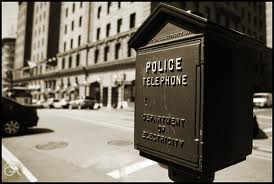
Who you gonna call?

Go and find a cop. Ideally, find one with 20 or 25 years of service who has spent his entire career in a patrol division, cruising the streets in a prowl car and answering calls. Now ask that cop these questions: How many armed robberies have you stopped while they were occurring? How many in-progress rapes have you broken up? How many times have you caught an armed burglar still in the house with the family he was victimizing? Then ask that cop this: How many reports have you written after the fact for armed robbery, rape, or home invasion?


I know to a metaphysical certainty that the numbers corresponding to the first set of questions will be vanishingly small compared to the numbers in the second set.* How could it be otherwise? Unless a lawman is on your block – or, for that matter, in your driveway – when the call comes, you cannot reasonably expect him to be there before the deed’s been done.  It’s one of Robert’s Rules: When seconds count, the police are just minutes away. (I didn’t make that one up, but it’s one of the Rules nonetheless.)

So I’m always stumped by the credulous, even irrational, faith of folks whose plan to defend themselves, their family, their home or their business is a call to 911. They have to know the Rule intuitively, if not from experience, don’t they? Yet they live like it isn’t so. It's hard to imagine them being similarly ignorant of the acceleration of gravity, so that they decide to take the window instead of the elevator to get from the top floor to the lobby.

Which is why I suspect that the failing is not intellectual, but moral.  I’d posit that these folks aren’t really ignorant of the capabilities and role of their local police department, but that they simply find it unpleasant to contemplate. Like Matthew Harrison Brady, they don’t think about things they don’t think about. They don’t think about what’s going to happen before the law arrives – or, more to the point, what they ought to do before the law arrives – because it doesn’t square with the popular lie, into which they have been steadily indoctrinated, that their security and their families’ security, is someone else’s lookout.

Lord knows, the indoctrination is ubiquitous, relentless and not easily resisted. My poor television is never so much in peril as when a TV journalist (now there’s an oxymoron) concludes yet another report of a citizen triumphing over a would-be bad guy the way such stories are always concluded: With the anchorman arching his eyebrows up under his blow-dried coif and scolding that, although it magically worked out this time, viewers should never consider similarly “taking the law into their own hands.” As if the talking head is peeved to have to report on a data point that falls outside the unified field theory of dependency.  As if defending yourself and your family were some form of vigilantism, instead of an absolute, God-given right and a sacred, non-delegable duty.

In a world where all manner of bad things happen, you cannot perfectly protect yourself or your family from all of them. But if you do not equip yourself as best you are able with the means, the training and – most importantly – the mindset to defend yourself and them from those bad things that can be met, countered, ameliorated, deterred, defeated or killed, then you’re a wastrel or a fool or a coward – or some admixture of the three.


*This statement is not theoretical, it is empirical. I come from a family full of cops. One in particular, my uncle Bill (EOW 11-20-75) had a tremendous influence on me and his on-duty murder when I was fifteen resonates still. My professional life has been spent in close association with cops. I recreate and socialize with cops and ex-cops.  I’ve asked every cop buddy I’ve ever had (and there are lots) and all of them – cops with 5 months on the job and cops with 35 years on the job – have said the same. The only exceptions: Those guys who served on crime suppression teams, what we used to call stakeout squads. And all of those will tell you those exceptions applied only while they were on those units, and only in the rare places such units were deployed.